Brass Inserts Nut About
Brass Inserts Nut
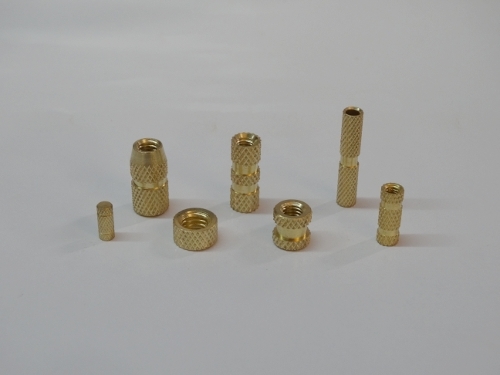
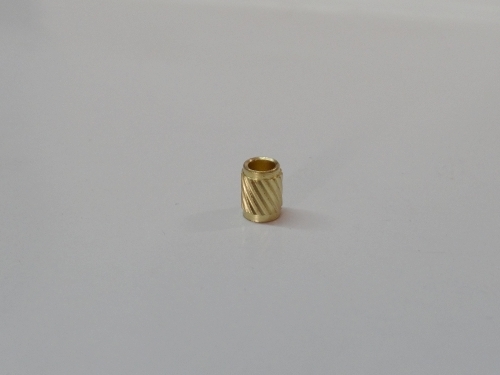
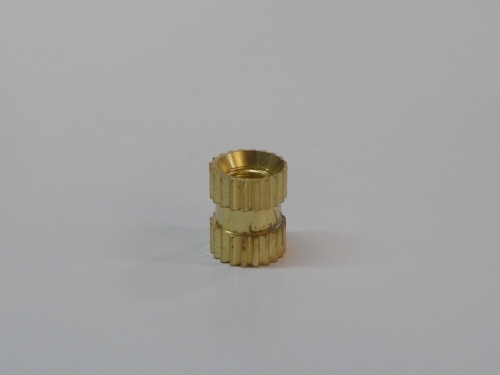
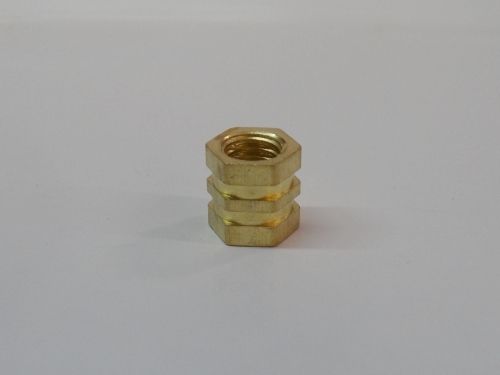
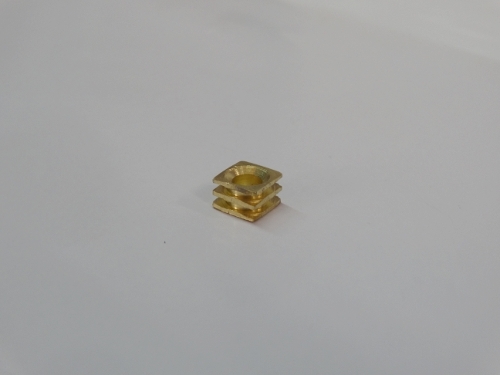
We are manufacturer and exporter of Brass Inserts Nut. We have wide range available in brass inserts. We can provide in Round Inserts, Hex Inserts, Square Inserts, Knurling Inserts, Threaded Inserts and as per customer's requirement.
Material
Free Cutting Brass IS 319 Type (l)
Free Cutting Brass as per BS 249 Type(I)
Generally Free Machine Grade of CuZn37Pb3 equivalent to BS 2874 is used to manufacture various brass threaded inserts in form of round, Hexagon, Square etc
Other grades which are followed as per custom requirements are CZ 121, CZ 131, C3604, CDA 360, and DTD 627 etc
High Grade Free Cutting Brass.
Any Special Brass Material Composition as per customers requirement
Threads
ISO Metric (MM Threads)
BA Threads
BSW Threads (Inches)
UNC, UNF,UNEF and NPT Threads
BSP & BSPT (Parallel & Taper Threads)
Any threads as per specifications
Features
Thread as per international Go and Not Go Gauge Standard.
Deep Groove for maximum Pull out Resistance.
Inner Diameter (ID) after threading with very close tolerance to prevent unrequired flush to enter into brass inserts.
Application
Plastic Industry
Rubber Industry
Electronic Industry
Electrical Industry,etc...
Unmatched Precision & VersatilityBrass Inserts Nuts are designed for high precision and superior wear resistance, suitable for a wide range of industries and applications. The engineering focus on tight tolerances and robust materials ensures dependable performance, while the flexibility in sizing, threading, and head types facilitates customization to meet specific project demands.
Quality Standards & Robust PerformanceMeeting international standards like DIN, ISO, JIS, and BS, or custom specifications, each insert undergoes stringent quality checks. With a tensile strength of up to 450 MPa and compatibility with high torque operations, the nuts deliver lasting reliability, minimizing maintenance and enhancing productivity for manufacturers and end-users alike.
FAQs of Brass Inserts Nut:
Q: How are Brass Inserts Nuts installed for plastic molding applications?
A: Brass Inserts Nuts are typically press-fitted, heat-installed, or ultrasonically embedded into molded plastic parts. Their precisely threaded bodies and wear-resistant features ensure secure anchoring and easy installation, reducing assembly time and improving structural integrity.
Q: What are the benefits of choosing C36000 grade brass for insert nuts?
A: C36000 brass offers excellent machinability, high tensile strength up to 450 MPa, and robust corrosion resistance. These qualities guarantee durable performance in demanding environments such as electronics, automotive, and telecommunications.
Q: When should I select custom sizes or threading for Brass Inserts Nuts?
A: Custom sizes or threading are recommended when standard dimensions do not fit the requirements of your specific application or drawing. This option enables optimal compatibility with unique designs in industries like switchgear, furniture, or electrical fittings.
Q: Where can these Brass Inserts Nuts be used effectively?
A: They excel in plastic molding, electronics, automotive, switchgear, furniture, electrical fittings, and telecommunications, providing secure fastening and reliable performance across a variety of materials and assemblies.
Q: What is the manufacturing process for these insert nuts?
A: Brass Inserts Nuts are precision machined from C36000 brass, followed by threading operations as per metric, unified, or custom specifications. Depending on the required finish and standards, further treatments and inspections ensure each nut meets international quality benchmarks.
Q: How does the nuts tolerance and finish impact its application?
A: A tolerance of 0.05 mm and bright finish allow for superior precision in fitting, reducing wear and ensuring a seamless interface with the host material. This translates into easier assembly, less risk of loosening, and enhanced longevity in service.
Q: What advantages does wear resistance and corrosion resistance offer to users?
A: Enhanced wear resistance and corrosion protection prolong the nuts lifespan, lower maintenance costs, and secure connections in harsh environments, making them ideal for high-load or frequent-use applications.






 Send Inquiry

 Send Inquiry
 Send Inquiry
 Send SMS